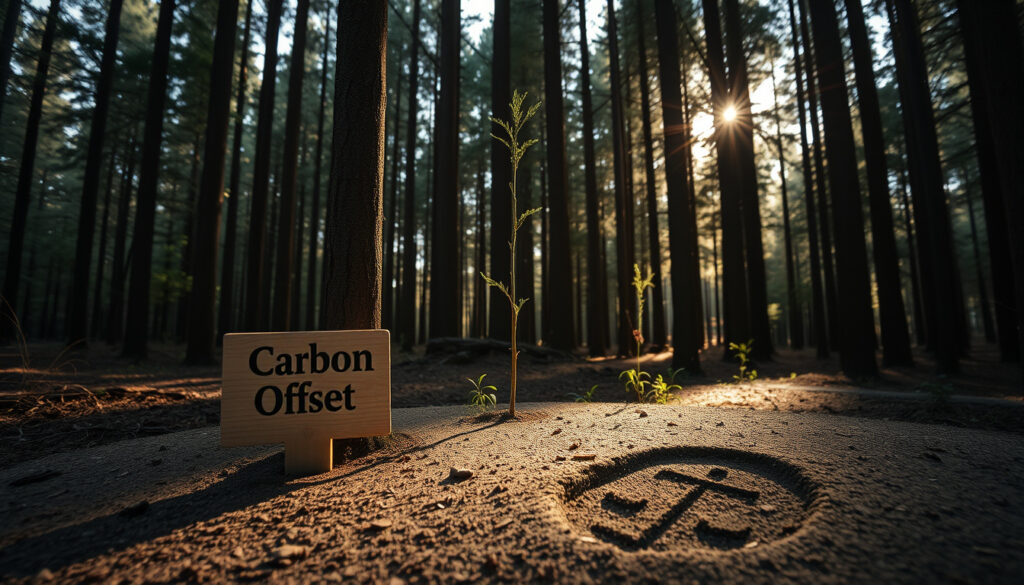
What Is a Carbon Offset? Definition, Examples, and How It Works
Anyone who’s looked at their airline booking or a company’s sustainability page has seen the “carbon offset” checkbox and wondered what it actually means. Behind that small fee lies a $2 billion global market built on the promise that you can pay someone else to clean up your emissions. This guide unpacks how offsets work, what they cost, and why environmentalists are deeply split over whether they help or hurt the climate fight.
Unit of measurement: 1 carbon offset credit = 1 metric ton CO₂e ·
Global voluntary market value (2021): Approximately $2 billion ·
Common project types: Reforestation, renewable energy, methane capture, carbon capture
Quick snapshot
- One offset credit equals exactly one metric ton of CO₂ equivalent (MIT Climate Portal (academic research institute))
- Offsets are traded on both voluntary and compliance markets (EOS (earth observation analytics firm))
- Projects must be verified by independent standards like Verra or Gold Standard (Sylvera (carbon offset data provider))
- Whether all offset projects truly achieve additional emission reductions beyond business-as-usual (MIT Climate Portal)
- Long-term effectiveness of nature-based offsets such as forests that may burn or die (Sylvera)
- Actual price transparency in the largely unregulated voluntary market (Greenly (corporate sustainability platform))
- Voluntary carbon market grew to roughly $2 billion in 2021, but scrutiny has intensified since 2023 with investigative reports questioning offset integrity (Greenly)
- Stricter regulation and standardized methodologies expected from bodies like the Integrity Council for the Voluntary Carbon Market (Sylvera)
The table below summarizes the key facts about carbon offsets.
| Fact | Value |
|---|---|
| Definition | A carbon offset is a certificate representing a reduction or removal of 1 metric ton of CO₂ equivalent (MIT Climate Portal) |
| Unit | 1 credit = 1 metric ton CO₂e (EOS) |
| Market size | Voluntary carbon market approximately $2 billion in 2021 (Greenly) |
| Key standards | Verra, Gold Standard, American Carbon Registry, Climate Action Reserve (Sylvera) |
| Main criticism | Lack of additionality and risk of greenwashing (MIT Climate Portal) |
What is carbon offset in simple terms?
The basic concept
- A carbon offset is a tradable certificate or credit linked to an activity that lowers atmospheric CO₂ or removes it from the atmosphere (MIT Climate Portal).
- When a person, company, or country offsets their emissions, they compensate by paying someone else to reduce emissions elsewhere (Carbon Market Watch).
- Offsets are typically used by buyers to compensate for emissions they still produce, not as a substitute for reducing emissions at the source (MIT Climate Portal).
Think of an offset as a receipt for pollution cleanup — but the cleanup happens somewhere else, often years later. The buyer pays, gets a certificate, and claims that the emission reduction has been “offset.”
The implication: Offsets are an accounting tool, not a physical removal guarantee. Their value depends entirely on whether the project behind the certificate would not have happened without the offset funding — a concept called additionality.
How offsets are generated
- Typical workflow: emissions estimation → project funding → verification of reductions → buyer claim based on verified reductions (EOS).
- Offsets are split into two broad categories: avoidance/reduction projects (preventing emissions) and removal/sequestration projects (taking CO₂ out of the atmosphere) (Greenly).
- Offset credits are marketed as financial products validated by certifying bodies or government agencies (EOS).
The trade-off: Avoidance projects are cheaper and more abundant, but removal projects — like direct air capture — are rarer and far more expensive because they actually pull carbon back out of the sky.
How much does 1 carbon credit offset?
One credit equals one metric ton of CO₂e
- Standard: 1 carbon credit = 1 metric ton of CO₂ equivalent (MIT Climate Portal).
- CO₂e includes CO₂ plus other greenhouse gases like methane and nitrous oxide, converted to their CO₂ equivalent impact.
One ton of CO₂ is roughly the amount produced by flying economy round-trip from New York to London. So a single credit can cover that flight — if the project behind it actually delivers on its promise.
Verification standards
- Credits are verified by programs like Verra (Verified Carbon Standard) and Gold Standard (Sylvera).
- Other notable standards: American Carbon Registry, Climate Action Reserve (EOS).
- Verification involves third-party audits of the project’s methodology and actual emission reductions.
The catch: Not all standards are equally rigorous. Some offset-market studies have found evidence of over-crediting, meaning credits may promise more emissions reductions than projects actually achieve (MIT Climate Portal).
How is the price of carbon offsetting calculated?
Factors influencing price: project type, location, co-benefits
- Price varies from $1 to $50 per ton depending on project quality (Greenly).
- Higher price often indicates co-benefits like biodiversity protection or community development.
- Project type matters most: renewable energy offsets are often cheaper, while direct air capture offsets can exceed $500 per ton.
A buyer who picks the cheapest offset may be funding a project that would have happened anyway — meaning their dollar did not actually reduce emissions by one additional ton. The price is a signal of project credibility, not just cost.
Market dynamics
- Voluntary market prices differ from compliance market prices (MIT Climate Portal).
- Voluntary offsets are bought by companies and individuals on a self-regulated basis.
- Compliance offsets are traded within regulated cap-and-trade systems like California’s cap-and-trade or the EU Emissions Trading System.
Price ranges
- Afforestation/reforestation: $5–$15 per ton.
- Renewable energy: $1–$5 per ton.
- Direct air capture: $200–$600 per ton.
- Verification and certification costs affect the final price buyers pay.
The pattern: The voluntary carbon market is fragmented and opaque, with prices that vary wildly even for the same project type. Without a centralized exchange, price discovery is difficult for both buyers and sellers.
What are the issues with carbon offsetting?
Additionality concerns
- Not all offsets represent real additional reductions — some projects would have happened anyway without offset funding (Sylvera).
- A 2024 Nature Communications study estimated that less than 16% of assessed credits reflected genuine, additional emission cuts (Greenly).
- Some analyses have concluded that many issued credits from rainforest offset programs did not correspond to real, measurable emission reductions (Greenly).
Offset projects in wealthy regions often have higher costs and deliver fewer “carbon per dollar” results, but they may be more verifiable. Cheap offsets from developing nations risk being non-additional — the same trees that would have stayed standing anyway.
Leakage
- Leakage occurs when emission reductions in one area cause increased emissions elsewhere (Sylvera).
- Example: A forest conservation project prevents logging in one plot, but loggers move to another unprotected forest.
Permanence
- Permanence risk: stored carbon can be released back into the atmosphere (Sylvera).
- A forest fire, drought, or pest outbreak can reverse years of carbon storage in weeks.
Double counting
- Double counting can inflate climate claims — the same offset is claimed by two different entities (MIT Climate Portal).
- This can happen when both the buying company and the host country count the same reduction toward their climate targets.
The trade-off: All four issues — additionality, leakage, permanence, double counting — are reasons why offsets are controversial. But they are not impossible to solve: rigorous verification, buffer pools, and transparent registries can address each.
Are carbon offsets worth it?
Arguments for offsets
- Offsets fund climate projects that might not otherwise attract investment, including reforestation, renewable energy, and methane capture.
- They provide a mechanism for companies and individuals to take responsibility for emissions they cannot eliminate today (MIT Climate Portal).
- High-quality, verified offsets can deliver genuine climate impact when part of a broader decarbonization strategy.
Arguments against
- Offsets risk becoming a substitute for real emission cuts — a “license to pollute” (Carbon Market Watch).
- Offset does not replace the need to reduce a company’s own emissions (Greenly).
- Poorly designed offset programs have resulted in over-crediting and fraudulent claims.
Best practices
- Transparency, third-party verification, and rigorous standards improve effectiveness (Sylvera).
- Use offsets as a last-resort tool after direct emission reductions, not as the primary strategy.
- Prefer removal projects over avoidance projects when possible, as they physically extract carbon.
For any buyer — a corporation targeting net-zero or an individual booking a flight — offsets are worth it only when they are high-quality, independently verified, and clearly communicated alongside a real plan to cut direct emissions. Offsets are a bridge, not a destination.
Upsides
- Funds real climate projects that would not exist otherwise
- Provides a way to address unavoidable emissions today
- Creates financial incentive for carbon removal innovation
- Supports biodiversity and community co-benefits
Downsides
- Risk of funding non-additional or over-credited projects
- Can delay direct emission cuts by creating a false sense of progress
- Lack of standardized pricing and verification in voluntary markets
- Greenwashing concerns when buyers use offsets as primary climate strategy
In short, offsets are a tool, not a solution. They work best when paired with genuine emission reductions.
Expert perspectives on carbon offsets
Carbon offsets are tradable ‘rights’ or certificates linked to activities that lower the amount of carbon dioxide in the atmosphere.
When a person, company or country offsets their emissions, they compensate by paying someone else to reduce emissions elsewhere.
bluebellindex.com, blog.constellation.com, ube.ac.uk, persefoni.com
While carbon offsets allow individuals and companies to compensate for their emissions, carbon tax systems operate by directly taxing fossil fuels to discourage their use.
Frequently asked questions
What types of carbon offset projects are most common?
The most common projects include reforestation and forest conservation, renewable energy installations like wind and solar farms, methane capture from landfills and livestock, and energy efficiency upgrades. Removal projects like direct air capture are rarer but gaining traction.
How can I purchase carbon offsets?
Individuals can buy offsets from specialized retailers like Cool Effect, Pachama, or Terrapass. Companies typically purchase through brokers or directly from project developers. Always check that offsets are verified by a recognized standard such as Verra or Gold Standard.
Are carbon offsets regulated?
Voluntary carbon offsets are not regulated by governments. Compliance offsets used in regulated cap-and-trade systems (like California or the EU ETS) operate under government oversight. The voluntary market is self-regulated by standards bodies and third-party verifiers.
What is the difference between voluntary and compliance carbon markets?
Voluntary markets operate outside any legal requirement — companies and individuals choose to buy offsets. Compliance markets exist within mandatory cap-and-trade or offset programs established by governments, such as California’s cap-and-trade program or the United Nations’ Clean Development Mechanism.
What does it mean when an offset is ‘verified’?
Verification means an independent third-party auditor has checked that the project’s emission reductions or removals are real, measurable, and additional. Verification follows methodologies approved by standards like Verra’s Verified Carbon Standard or the Gold Standard.
How long do carbon offset credits last?
Carbon offset credits do not have a fixed expiration date, but their value depends on the project’s duration. Forest-based credits, for example, may need to guarantee carbon storage for 30–100 years. Some registries retire credits after a certain period or require buffer pools to cover reversal risks.
Can carbon offsets be used to achieve net-zero?
Yes, but only as a complement to deep emission cuts. The Science Based Targets initiative (SBTi) recommends that companies use offsets to neutralize residual emissions after reducing direct and indirect emissions by at least 90%. Offsets cannot substitute for emission reductions on the path to net-zero.
What is a carbon offset project example?
The Kasigau Corridor REDD+ project in Kenya protects over 200,000 hectares of dryland forest, preventing deforestation that would release stored carbon. It has generated over 20 million verified carbon credits since 2011 under the Verra standard.
Ultimately, the effectiveness of carbon offsets depends on integrity and transparency. Buyers must choose wisely.
More related posts
 Andrew Wilson: Actor, Pastor, EA CEO – Who Is He
 Chinese Yuan to CAD: Weak CAD, Strong Yuan Explained
 Jeff Bezos Net Worth 2025: Wealth, Ranking & Donations
 You (TV Series) – Plot Cast Seasons Finale Guide
 Graham Norton: Husband, Show Future, Private Life in Ireland
 Best Suspiro a la Limena Near Me – Top Lima Spots & Recipe
 Ted Kennedy: Conviction, Death, and Political Legacy
 Pete Buttigieg: Biography, Net Worth, Health, and Current Role
