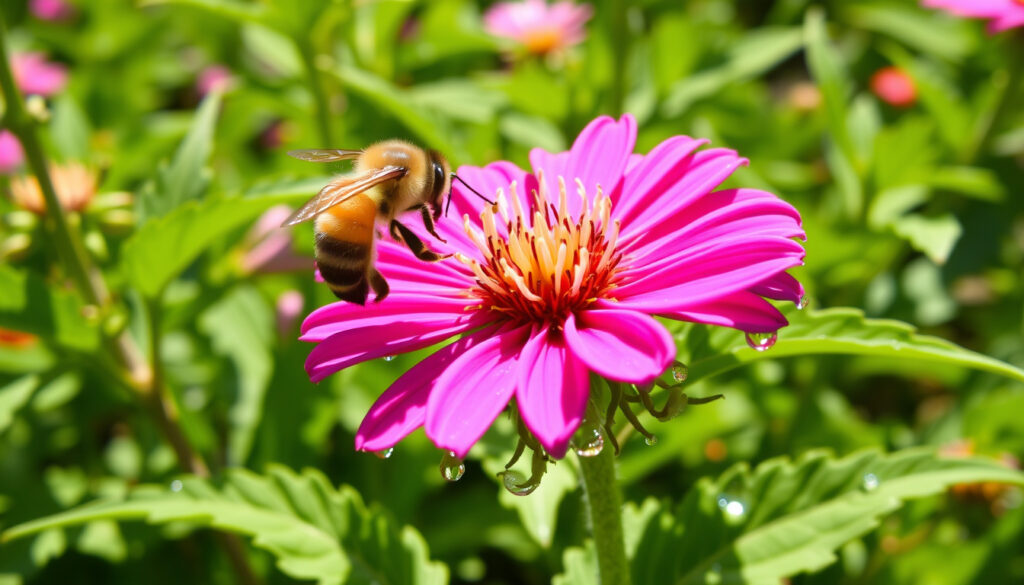
Bee Balm Growing Guide: Care, Planting, and Uses for Monarda
Anyone who’s spent a summer afternoon watching bumblebees tumble into spiky red blossoms already suspects what bee balm can do. This North American perennial, also known as Monarda, pulls in hummingbirds and butterflies while its aromatic leaves may help keep mosquitoes at arm’s length.
Scientific name: Monarda ·
Hardiness zones: 3-9 ·
Bloom time: Summer ·
Height: 2-4 ft ·
Sunlight: Full sun to partial shade ·
Soil: Moist, well-drained
Quick snapshot
- Perennial that returns each year from its root system (USDA Plants Database (federal plant database))
- Attracts bees, hummingbirds, and butterflies (NC State University (land-grant research institution))
- Powdery mildew is the most common disease problem (USDA Plant Guide for Scarlet beebalm (federal plant guide))
- Exact degree of mosquito repellency in garden conditions is untested in field trials
- Effectiveness against deer and rabbits is anecdotal and varies locally
- Optimal companion plant combinations lack rigorous study
- Exact soil chemistry preferences for different Monarda species are not well documented
- Spring: Plant after last frost; blooms midsummer (Grow Native! (native plant conservation program))
- Summer: Deadhead spent flowers for repeat bloom (Melinda Myers (horticulturist))
- Fall: Divide clumps every 2-3 years to control spread (University of Illinois Extension (cooperative extension service))
- Cut stems to 2 inches after first frost
- Mulch crown in cold zones (USDA 3-5)
- Watch for powdery mildew as temperatures rise in spring
Eight key facts at a glance — from botanical name to hardiness range:
| Botanical name | Monarda |
| Common names | bee balm, bergamot, oswego tea, horsemint |
| Plant type | Herbaceous perennial |
| Mature size | 2–4 ft tall, 1–3 ft wide |
| Bloom color | Red, pink, purple, white |
| Sun exposure | Full sun to partial shade |
| Soil type | Moist, well-drained |
| Hardiness zones | 3–9 (USDA) |
Does bee balm come back each year?
Yes — bee balm is a true herbaceous perennial. It dies back to the ground in winter and resprouts from its root system each spring. USDA Plants Database lists it as a perennial forb/herb, and it overwinters reliably in USDA zones 3 through 9. Giving the crown a light mulch after the first freeze helps in the coldest parts of its range.
Where is the best place to plant bee balm?
Sunlight requirements
- Full sun (6+ hours of direct sun) produces the most flowers and compact growth (Grow Native! native plant conservation program).
- Partial shade is tolerated, but plants may get leggy and bloom less.
Soil preferences
- Moist, well-drained soil is ideal. Spotted bee balm (Monarda punctata) is more drought tolerant once established (Melinda Myers horticulturist and gardening author).
- Avoid heavy clay that stays wet; raised beds can help.
Spacing and air circulation
- Space plants 18–24 inches apart to allow air movement, which reduces powdery mildew risk (USDA Plant Guide for Scarlet beebalm federal plant guide).
The pattern: more sun and better drainage mean fewer disease headaches. Plant in a spot where air flows freely — crowded corners invite mildew.
What are the cons of bee balm?
Powdery mildew susceptibility
- Powdery mildew is the most common disease problem, especially in humid conditions (USDA Plant Guide for Scarlet beebalm federal plant guide). White coating on leaves can stunt growth.
Aggressive spreading
- Monarda didyma spreads rapidly by underground stolons and can outcompete less vigorous neighbors (NC State University land-grant research institution).
Short bloom period
- Individual flowers last only a few weeks. Deadheading can encourage a second flush, but peak show is relatively brief.
Bee balm’s vigor is both its selling point and its headache. For a small mixed border, its spreading habit can overwhelm phlox or echinacea within two seasons. But in a large native garden or meadow, that same trait delivers a dense pollinator buffet.
Upsides
- Attracts bees, hummingbirds, and butterflies
- Aromatic oils (thymol, carvacrol) may repel mosquitoes
- Spotted bee balm is drought tolerant and deer resistant (Melinda Myers horticulturist)
- Leaves can be used for tea
Downsides
- Powdery mildew common in humid conditions
- Spreads aggressively via rhizomes
- Short individual bloom period
- Deer and rabbit resistance is anecdotal, not guaranteed
What does bee balm keep away?
Mosquitoes
The aromatic oils in bee balm — thymol and carvacrol — are known mosquito repellents (NC State University land-grant research institution notes the plant’s scent). However, no controlled garden trials have measured how effectively a living plant reduces mosquito landing rates. Crushing the leaves releases the strongest odor, which suggests that placing bee balm near seating areas and brushing against it may help.
Other pests
- Deer and rabbits: Anecdotal reports vary widely. The University of Illinois Extension notes that deer may avoid strongly scented plants, but local pressure matters (University of Illinois Extension cooperative extension service).
- Beneficial insects: The same oils that repel pests also draw predatory wasps and parasitic flies.
The catch: bee balm is not a mosquito-zoning plant. Its repellent effect is subtle and depends on proximity and leaf disturbance. The real payoff is the pollinator traffic.
Should bee balm be planted in pots or ground?
What not to plant next to bee balm?
Container growing is possible but requires larger pots (12+ inches diameter) and daily watering in summer. In-ground planting allows natural spreading and stronger growth. Avoid planting near aggressive spreaders like mint or shallow-rooted plants that may be overwhelmed. Plant Addicts (gardening retailer) suggests pairing bee balm with shrubs that prefer drier soils and full sun, such as lavender, rosemary, and thyme.
How to grow bee balm: step-by-step
Most bee balm failures come from two mistakes: planting in too much shade and not dividing often enough. These steps fix both.
- Choose the site. Full sun (6+ hours) with moist, well-drained soil. Test drainage: if water pools after rain, amend with compost or use a raised bed.
- Plant at the right time. Spring after last frost, or early fall (6 weeks before hard freeze). If fall planting, trim stems to reduce transplant shock (American Meadows seed and plant retailer).
- Space for airflow. 18–24 inches apart to discourage powdery mildew.
- Water consistently. Keep soil evenly moist the first season. Once established, bee balm tolerates brief dry spells.
- Deadhead spent flowers. Cut back to a lateral bud to extend blooming into late summer.
- Divide every 2-3 years. Dig up the clump, split into sections with healthy roots, and replant. This controls spread and revitalizes growth.
- Cut back in fall. After first frost, cut stems to 2 inches above ground and remove debris to reduce overwintering mildew spores.
Confirmed facts vs. what’s still unclear
Confirmed facts
- Bee balm is a perennial that returns each year (American Meadows (seed and plant retailer)).
- It attracts pollinators like bees, butterflies, and hummingbirds (Plant Addicts (gardening retailer)).
- Powdery mildew is a common problem in humid conditions (Wikipedia (online encyclopedia)).
- The plant contains thymol and carvacrol, compounds known to repel mosquitoes (Gardener’s World (gardening publication)).
What’s still unclear
- The exact degree of mosquito repellency under varying conditions is not well-documented in garden trials.
- Effectiveness against deer and rabbits is anecdotal and may depend on local populations.
- Optimal companion plant combinations beyond general guidelines are not rigorously studied.
“Monarda is a genus of aromatic perennial herbaceous plants native to North America. The leaves can be used to make tea.”
Wikipedia (online encyclopedia)
“For the best results, grow bee balm in full sun and moist, well-drained soil.”
Gardener’s World (gardening publication)
“The carvacrol in bee balm gives it an oregano-like flavor and scent.”
Fine Gardening (gardening magazine)
Related reading: Bee Balm: Growing, Care, Pros & Cons
facebook.com, ask.extension.org, gardenia.net, scottsmiraclegro.com
For home gardeners looking to expand their knowledge, our detailed companion guide on growing bee balm successfully covers pros, cons, and soil requirements for this pollinator-friendly perennial.
Frequently asked questions
How do you propagate bee balm?
Divide existing clumps in spring or fall. Each division should have at least two shoots and a healthy root section. You can also grow from seed, but division preserves cultivar traits.
When is the best time to prune bee balm?
Cut back stems in late fall after the first frost. During the growing season, deadhead spent flowers to encourage more blooms.
Can bee balm be grown in shade?
It tolerates partial shade (3-4 hours of sun), but growth becomes leggy and flowering is reduced. Powdery mildew also becomes worse in shady, damp conditions.
How do you overwinter bee balm in cold climates?
After the first hard freeze, cut stems to 2 inches and apply 2-3 inches of mulch over the crown. Remove mulch in early spring to allow new growth.
Is bee balm safe for pets?
Bee balm is not listed as toxic to dogs or cats by the ASPCA, but ingestion may cause mild stomach upset. The leaves are used in herbal teas for humans.
How often should you fertilize bee balm?
Light feeding once in early spring with a balanced fertilizer (10-10-10) is sufficient. Too much nitrogen encourages leafy growth and more mildew.
What are the common bee balm varieties?
Popular varieties include Monarda didyma ‘Jacob Cline’ (red, mildew-resistant), Monarda fistulosa (wild bergamot, lavender), and Monarda punctata (spotted bee balm, yellow with purple spots).
For the home gardener in the US, the choice is clear: plant bee balm for its beauty and pollinator value, but plan for its spread and disease management from day one. With regular division and a sunny, airy spot, you get a season of color that rewards both you and the bees. Skimp on airflow or skip dividing, and you’ll spend summer fighting white powder. Bee Balm: Growing, Care, Pros & Cons covers more on variety selection.
More related posts
 Captain America Civil War: Hit or Flop, Cast, Sides
 NHL Standings 2025-2026: Live Updates, Projections & Playoffs
 Sophie Brussaux: Drake’s Baby Mama, Artist, and Philanthropist
 Billy Campbell: Biography, Career, Net Worth & Personal Life
 Christopher Lee biography: Fact vs fiction on war service myths
 Renouvellement Carte Assurance Maladie – Step-by-Step Renewal Guide
 Abraham Lincoln: Facts vs Myths, Answered
 Tyler Glasnow: Career, Salary, Tattoo, and Fiancée
