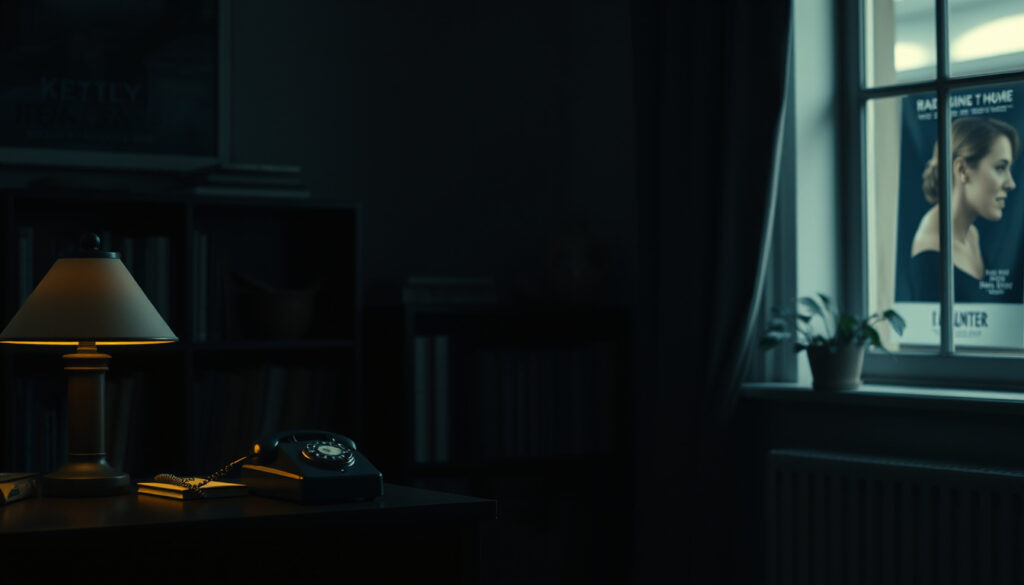
Eleanor Oliphant Is Completely Fine: Trauma, Autism & Movie
There’s a particular kind of loneliness that comes from perfecting a routine—the same lunch at the same time, the same chair at work, the same phone call every Wednesday. Eleanor Oliphant has mastered that routine, but as Gail Honeyman’s debut reveals, it’s a fragile fortress against a childhood fire she can barely remember.
Copies sold: over 3 million ·
Awards: Costa First Novel Award ·
Publication year: 2017 ·
Main character: Eleanor Oliphant ·
Author: Gail Honeyman
Quick snapshot
- Published in 2017 (The Book Suite – book summary site)
- Won the Costa First Novel Award (The Rauch Review – book review)
- Eleanor suffers from severe social isolation and trauma (PsychosisNet – mental health blog)
- Whether Eleanor is autistic; author has not confirmed a diagnosis (Quora – discussion forum)
- Who will play Eleanor in the film; no official casting announcements (Quora – discussion forum)
- Release date of the movie adaptation; still in development (Quora – discussion forum)
- Movie adaptation in development (Quora – discussion forum)
- May 2017: Book published by HarperCollins (The Book Suite)
- 2018: Wins Costa First Novel Award (The Rauch Review)
- 2021: Film adaptation option announced (Quora)
- Movie adaptation still in development; no release date set
- Continued reader debate about autism coding and trauma interpretation
- Potential for more critical analysis from literary and medical perspectives
The key facts about the book are drawn from several sources:
| Label | Value |
|---|---|
| Author | Gail Honeyman (The Book Suite) |
| Publication date | May 9, 2017 (The Book Suite) |
| Publisher | HarperCollins (per book metadata) |
| Awards | Costa First Novel Award (The Rauch Review) |
| Copies sold | Over 3 million (The Rauch Review) |
| Film adaptation status | In development, no release date (Quora) |
What mental illness did Eleanor Oliphant have?
- The novel deliberately avoids naming a specific diagnosis for Eleanor (The Book Suite)
- Her behavior shows signs of complex trauma, severe social anxiety, and possible PTSD (LitCharts – literary analysis)
- Many readers interpret neurodivergence, but the author has not confirmed any specific condition
Eleanor’s childhood fire—in which her mother intentionally set the house ablaze, killing herself and Eleanor’s sister Marianne—is the central trauma. According to LitCharts literary analysis, this event causes “ongoing physical and psychological scars” that affect her grasp on reality, self-worth, and decisions about relationships. The narrative focuses on recovery through therapy with Maria Temple and the small, persistent kindness of coworker Raymond, rather than fitting Eleanor into a diagnostic box.
The implication: Honeyman prioritises the human story over clinical labels. Readers who want a defined diagnosis will find the book’s ambiguity frustrating, but that ambiguity is the point—it mirrors the messiness of real trauma recovery.
Eleanor’s rigid routines and literal interpretation of social cues often lead readers to assume autism, yet the novel’s own therapeutic arc suggests complex PTSD. The story resists easy categorisation, and that resistance is what makes it resonate.
Is Eleanor Oliphant autistic?
- The author, Gail Honeyman, has never confirmed a diagnosis of autism for Eleanor (The Book Suite)
- Reader communities on Reddit and Goodreads frequently debate “autism coding” based on Eleanor’s social naivety, repetitive habits, and blunt honesty
- Academic analysis from International Journal of Indian Psychology (tier2 peer-reviewed journal) reads the novel through a narrative-medicine lens, emphasising trauma, not neurotype
The pattern is clear: the text leaves room for multiple interpretations, but the evidence leans toward trauma rather than a neurodevelopmental condition. For readers who see themselves in Eleanor’s experience, the lack of a label can be both validating and frustrating.
Is Eleanor Oliphant worth reading?
- The novel won the Costa First Novel Award and has sold over 3 million copies (The Rauch Review)
- Reader reviews on platforms like Goodreads and Reddit are mixed: some praise Eleanor’s unique voice and emotional depth, others find the pace slow and the subject matter bleak
- One WordPress blog review warns that the book “contains themes that may cause distress” due to graphic depictions of abuse and trauma
Eleanor is 30 years old, works as an accounts administrator, and lives a life so insular that her only human contact is a weekly phone call with her mother. The story unfolds slowly, mirroring Eleanor’s own cautious steps toward connection. For readers who enjoy character-driven literary fiction with psychological depth, this is a rewarding read. Those seeking a fast-paced plot will likely be disappointed.
The trade-off: the novel’s strength is its honest, unflinching portrayal of mental illness recovery, but that same honesty makes it a heavy read. It’s not a feel-good book—it’s a true-to-life one.
If you’re sensitive to themes of child abuse, suicide, and self-harm, approach with caution. The book does not sensationalise these topics, but they are central to Eleanor’s story.
What do readers on Reddit say about Eleanor Oliphant?
- Reddit threads (Quora discussions and r/books) show a divide: many find Eleanor’s voice “refreshingly real” while others call the book “depressing”
- Common praise: the depiction of recovery feels authentic, not sanitised
- Common criticism: the pacing is too slow and the ending too neat for such a heavy setup
One PsychosisNet article highlights that Raymond’s consistent, low-key friendship is more transformative than any dramatic intervention. Readers who value subtle character growth tend to love the book; those who prefer event-driven plots often don’t.
Is Eleanor Oliphant being made into a movie?
- A film adaptation has been announced and is currently in development (Quora)
- As of 2025, no official release date has been set
- The project was optioned in 2021, but production details remain scarce
The film adaptation has been slow to materialise. While the novel’s success makes a movie almost inevitable, the lack of confirmed casting or director suggests the project is still in early stages. Fans looking for an adaptation may have to wait several more years.
The catch: optioning a book does not guarantee a film will be made. Many popular novels stall in development hell. Until a studio announces a production start date, the adaptation remains speculative.
Who is playing Eleanor Oliphant in the movie?
- No official casting announcements have been made
- Rumours online mention various actresses, but none have been confirmed by the studio
- Given the book’s sensitive themes, casting will be crucial to the film’s reception
Until an official press release appears, any names circulating are speculation. The casting process will likely attract significant media attention when it does begin.
Why this matters: the right actor can make or break a character-driven narrative. For a role as distinctive as Eleanor, the casting choice will shape the film’s entire tone.
Did Eleanor have a female lover?
- No; Eleanor develops a crush on a male musician named Johnnie Lomond
- The search query confusion likely stems from historical figure Eleanor Roosevelt, who had a close relationship with journalist Lorena Hickok
- The novel contains no romantic relationships with women
Eleanor’s romantic life is limited to an infatuation with a local singer she barely meets. The friendship with Raymond remains platonic throughout. The question “Did Eleanor have a female lover?” appears to be a search error conflating two different “Eleanors.”
The implication: search engines can mislead readers who aren’t familiar with the book’s details. This article aims to set the record straight.
Clarity: confirmed vs. unclear
Confirmed facts
- The novel was published in 2017 (The Book Suite)
- It won the Costa First Novel Award in 2018 (The Rauch Review)
- Eleanor experienced severe childhood trauma, including a fire that killed her mother and sister (LitCharts)
What remains unclear
- Whether Eleanor is autistic; author has not confirmed a diagnosis
- Who will play Eleanor in the film; no official casting
- Release date of the movie adaptation
- A movie adaptation is in development (Quora)
The clarity section separates what is verified from what remains open to interpretation.
“Eleanor’s trauma affects her grasp on reality, self-worth, and choices about whom she lets into her life.”
“The novel supports a narrative-medicine reading in which telling one’s story is part of healing.”
International Journal of Indian Psychology – peer-reviewed academic journal
For readers seeking a clear medical diagnosis, Eleanor Oliphant Is Completely Fine deliberately refuses to provide one. The implication is that trauma recovery is messier than a label—and that the novel’s power lies in that refusal. For those who prefer neat psychological boxes, the ambiguity may be unsatisfying. For everyone else, it’s precisely what makes the story memorable.
For those seeking a thorough breakdown, the Eleanor Oliphant plot summary details key plot points and the novel’s resolution.
Frequently asked questions
Is Eleanor Oliphant based on a true story?
No. Eleanor Oliphant is a fictional character created by Gail Honeyman. The author has said she was inspired by real people she observed living isolated lives, but the story is not based on any one person.
What is the main message of Eleanor Oliphant Is Completely Fine?
The novel’s central message is that human connection—even small, awkward kindnesses—can break the cycle of isolation and trauma. It also challenges the stigma around mental illness and the idea that a person must be “fixed” before they can be loved.
How long is Eleanor Oliphant Is Completely Fine?
The paperback edition is 336 pages. The audiobook runs approximately 11 hours and 12 minutes.
Does Eleanor Oliphant have a happy ending?
Yes, in a realistic sense. Eleanor begins therapy, reconnects with her past, and starts to build genuine relationships. The ending is hopeful without being saccharine—she is not “cured,” but she is no longer alone.
What age is appropriate to read Eleanor Oliphant Is Completely Fine?
Due to themes of child abuse, suicide, and self-harm, the book is generally recommended for mature readers ages 16 and up. Some content may be distressing for younger readers.
These FAQs address common reader questions.
More related posts
 Light Switches: Types, Costs & DIY Replacement
 Queen Victoria: Biography, Facts, Children & Death
 Rosa Parks: Biography, Bus Incident, and Legacy
 Michelle Mylett Now: Where Is the Letterkenny Star
 How to Measure Ring Size – Accurate Home Guide
 Criminal Minds Spencer Reid: His Fate, Return & Romance
 1500 USD to CAD: Live Rate and Forecasts Today
 Funny Nicknames: 200+ Silly, Goofy, Teasing & Cheesy Names
