Coral Reef: Definition, Types, Cold-Water Locations in Ireland
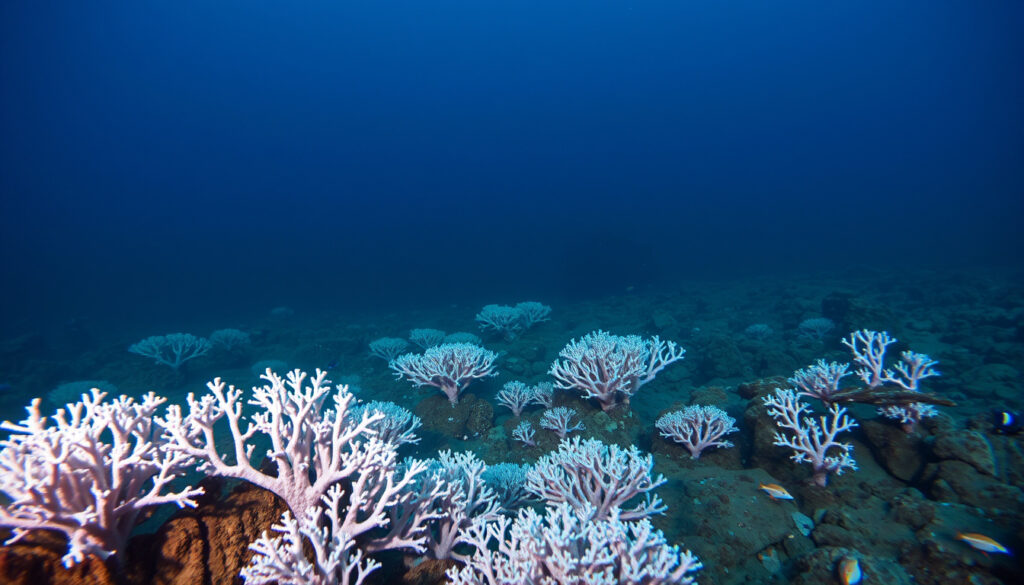
Most people picture coral reefs as sun-drenched tropical waters teeming with colorful fish. But beneath the dark, cold waters off the coast of Ireland, a very different kind of reef thrives—one that never sees sunlight and builds its skeleton in near-freezing temperatures.
Ocean floor coverage: less than 1% ·
Marine species supported: 25% ·
Described reef-building coral species: ~800 ·
Coastal protection value (global): billions of dollars per year ·
Countries with major coral reefs: over 100
Quick snapshot
- Coral reefs are declining globally due to climate change, ocean acidification, and pollution (AskAboutIreland (Irish educational resource))
- Cold-water reefs exist off the coast of Ireland (National Parks & Wildlife Service (Ireland’s nature conservation authority))
- The long-term recovery potential of damaged reefs under various climate scenarios (The Conversation (academic journalism platform))
- The exact impact of deep-sea trawling on Irish cold-water reefs (ORCA Ireland (marine conservation organization))
- Irish cold-water coral reefs are estimated to be about 4,500 years old (AskAboutIreland)
- A deep-water coral province covering 200 sq km with ~40 mounds was discovered off the west coast of Ireland (CORDIS (European Commission research database))
- Continued mapping and monitoring of Irish cold-water reefs is needed to inform protection measures (National Parks & Wildlife Service)
- Climate change may shift the distribution of cold-water corals, requiring adaptive management strategies (The Conversation)
The table below highlights the key numbers that define these ecosystems.
| Fact | Value |
|---|---|
| Ocean area covered | Less than 1% |
| Marine biodiversity hosted | 25% of all ocean species |
| Number of reef-building coral species | ~800 |
| Average depth of warm-water reefs | 0–50 m |
| Depth of cold-water reefs off Ireland | 600–1000 m |
The contrast between shallow tropical reefs and deep cold-water reefs shows just how diverse the coral world really is. The depth of Irish cold-water reefs – up to a kilometer down – places them far beyond the reach of sunlight and snorkelers alike.
What Exactly Is a Coral Reef?
A coral reef is an underwater ecosystem built from the calcium carbonate skeletons of coral polyps (AskAboutIreland). These tiny animals, related to jellyfish, live in colonies and secrete a hard skeleton that forms the reef structure over thousands of years.
Key components of a coral reef
- Coral polyps – the living animals that build the reef
- Calcium carbonate skeleton – the structural foundation
- Symbiotic algae (zooxanthellae) – provide energy through photosynthesis in warm-water reefs
- Water conditions – warm-water reefs need clear, shallow, sunlit water; cold-water reefs need strong currents and food particles
How coral polyps build reefs
Each coral polyp secretes a cup-shaped skeleton of calcium carbonate beneath its body. As polyps reproduce and die, new generations grow on top of old skeletons, gradually building the reef mass. In cold-water reefs, species like Lophelia pertusa and Madrepora oculata form these structures at depths of 200–1600 m (National Parks & Wildlife Service). Unlike warm-water corals, they do not rely on sunlight and instead trap plankton and organic particles (NatureScot (Scottish natural heritage agency)).
Despite growing in darkness and cold, cold-water coral mounds can rise hundreds of meters above the seafloor – some as high as 500 m (NPWS). That’s taller than the Empire State Building.
The implication: coral reefs are not one-size-fits-all. The same basic polyp architecture can build structures in sunlit tropics or in deep, near-freezing waters, as long as food and currents are available.
What Is Another Name for a Coral Reef?
Coral reefs are often called the “rainforests of the sea” because of the immense biodiversity they pack into a small area (The Conversation).
Common terms and synonyms
- Rainforests of the sea
- Coral garden (for smaller, more delicate formations)
- Reef (general term for any underwater ridge)
- Coral head (a single massive coral colony)
- Patch reef (a small, isolated reef)
Related formations: atolls, barrier reefs
Atolls are ring-shaped reefs that enclose a central lagoon, formed when a volcanic island subsides. Barrier reefs run parallel to a coastline separated by a deeper channel or lagoon. Patch reefs are small, isolated formations often found inside lagoons. All these are variations of the same calcium-carbonate architecture.
The pattern: each name reflects a different relationship with the land – from attached (fringing) to offshore (barrier) to standalone (atoll). Cold-water reefs don’t fit these neat categories because they grow in deep water far from any island.
What Are the 4 Types of Coral Reefs?
Marine scientists typically recognize four main reef types, each defined by its position relative to land.
Fringing reefs
Fringing reefs grow directly from the shore, forming a narrow shelf. They are the most common type and often the first to develop (AskAboutIreland).
Barrier reefs
Barrier reefs are separated from the coastline by a deeper lagoon. The Great Barrier Reef is the most famous example, stretching over 2,300 km off Australia.
Atolls
Atolls are ring-shaped reefs that surround a central lagoon. They form when a volcanic island sinks, leaving only the reef ring above water. The Maldives are built on atolls.
Patch reefs
Patch reefs are small, isolated coral formations, often found in lagoons or on continental shelves. They can be the beginning stages of larger reef systems.
Cold-water reefs off Ireland do not fit any of these four types because they grow on continental slopes and carbonate mounds, not around coastlines or islands. They are a fifth category rarely taught in school.
The catch: the classic four-type classification is perfect for tropical destinations but completely misses the deep-water reefs that cover vast areas of the Atlantic. Any ecologist working in Irish waters needs a fifth box: “cold-water carbonate mound.”
Are There Any Coral Reefs in Ireland?
Yes – and they are among the most spectacular in the world. Ireland’s cold-water coral reefs thrive on the continental margin, far from the sunny lagoons most people imagine.
Cold-water coral reefs off Irish coast
The largest known Irish cold-water reefs are in the Belgica Mound Province, southwest of Ireland. According to ORCA Ireland (marine conservation organization), this province contains over 50 giant coral mounds and 300 smaller reefs. CORDIS reports a deep-water coral province covering about 200 square kilometers with at least 40 mounds, some rising 100 meters above the seafloor.
Deep-sea coral ecosystems at 600–1000 meters
These reefs are found at depths of 600 to 1,000 meters, in water temperatures of 4–8°C and salinity of 32–36% (National Parks & Wildlife Service). The key species are Lophelia pertusa and Madrepora oculata, which form branching structures that provide habitat for fish, crabs, and deep-sea sponges.
“[These are] the most pristine, thriving and spectacular examples of cold-water coral reefs I have encountered in nearly ten years of study in Irish waters.”
Dr Anthony Grehan, cited by CORDIS (European Commission research database)
The catch: these cold-water reefs are fragile and slow-growing. A single trawl can destroy centuries of growth. Protecting them requires knowing exactly where they are – and that mapping is still incomplete.
Why Shouldn’t You Touch a Coral Reef?
Even a light touch can cause lasting damage. Coral polyps are protected by a thin mucus layer that guards against disease and UV radiation. When touched, that layer is scraped off, leaving the coral vulnerable to infection and death (NatureScot).
Damage to coral polyps
- Oils and chemicals from human skin can poison sensitive polyps
- Physical contact can break fragile coral branches, especially in cold-water species
- Sediment stirred up by swimmers can smother coral colonies
Chemical and physical harm to the reef
Sunscreen ingredients, even at tiny concentrations, can trigger viral infections in corals and accelerate bleaching. Touching also breaks the delicate structure of branching corals like Lophelia pertusa, which grow just millimeters per year (NPWS).
Regulations and guidelines from NOAA
The US National Oceanic and Atmospheric Administration advises visitors to coral reefs to “look, don’t touch,” and many marine parks prohibit any physical contact. The same principle applies to the deep-water reefs off Ireland, where even remote-operated vehicles must be handled with care.
For Irish cold-water reefs, the greatest human threat is not tourists (they are too deep for divers) but bottom trawling and cable-laying, which can flatten mounds that took millennia to grow (ORCA Ireland).
The implication: the “don’t touch” rule applies to more than just vacation photos. For Ireland’s hidden reefs, the policy should extend to fishing gear and seafloor infrastructure.
What Scientists Are Saying
“Cold-water corals can grow in the dark, in deep, cold water, catching their own food.”
“More than half of the 5,100 coral species on Earth are cold-water corals.”
The Conversation (academic journalism platform)
Confirmed facts
- Coral reefs are declining globally due to climate change, ocean acidification, and pollution (AskAboutIreland)
- Cold-water reefs exist off the coast of Ireland (NPWS)
- The Belgica Mound Province contains over 50 giant coral mounds and 300 smaller reefs (ORCA Ireland)
What’s unclear
- The long-term recovery potential of damaged reefs under various climate scenarios (The Conversation)
- The exact impact of deep-sea trawling on Irish cold-water reefs (ORCA Ireland)
- How many cold-water coral reef provinces remain unmapped in Irish waters (CORDIS)
For Ireland, the choice is clear: either invest in mapping and protecting these deep-water coral provinces, or risk losing ecosystems that have been growing since the last ice age. The cold-water reefs off the west coast are not a curiosity – they are a globally significant biodiversity bank, and the window to understand and safeguard them is narrowing.
universitytimes.ie, scseagrant.org, en.wikipedia.org, youtube.com, ocean.si.edu, marine.ie
For a deeper look at these deep-sea ecosystems, see our guide on cold-water coral reefs off Ireland.
Frequently asked questions
How do coral reefs form?
Coral reefs form when coral polyps secrete calcium carbonate skeletons that accumulate over thousands of years. Living polyps build on top of old skeletons, creating the reef structure. Cold-water reefs form the same way but without symbiotic algae (NatureScot).
What is coral bleaching?
Coral bleaching occurs when stress (usually high water temperature) causes corals to expel the symbiotic algae living in their tissues. Without the algae, the coral turns white and becomes more vulnerable to disease and death (AskAboutIreland). Cold-water corals are less prone to bleaching but face other stresses.
How do humans damage coral reefs?
Pollution, overfishing, coastal development, and climate change are major threats. For cold-water reefs, bottom trawling and seabed mining cause direct physical destruction (ORCA Ireland).
What is the largest coral reef system?
The Great Barrier Reef off Australia is the largest, stretching over 2,300 km. It is a barrier reef system composed of nearly 3,000 individual reefs.
Can coral reefs survive climate change?
Some corals may adapt or migrate, but current rates of warming and acidification are outpacing natural adaptation. Cold-water reefs may be more resilient to temperature rise but are threatened by ocean acidification and changing currents (The Conversation).
What is the difference between warm-water and cold-water coral reefs?
Warm-water reefs rely on symbiotic algae for food and need clear, shallow, sunlit water (typically 0–50 m deep). Cold-water reefs do not use sunlight; they catch plankton and thrive at depths of 200–1,600 m in water as cold as 4°C (NPWS).
Are coral reefs alive?
The reef structure is made of old skeletons, but the surface is covered with living coral polyps. So a reef is a mix of living animals and their mineral remains. In that sense, it’s as alive as a forest – the soil is dead, but the trees are living.
How long do coral reefs take to grow?
Growth rates vary: branching corals may grow 1–10 cm per year, while massive corals grow just millimeters annually. Irish cold-water reefs are estimated to be about 4,500 years old (AskAboutIreland).
Related reading: Bee Balm Growing Guide: Care, Planting, and Uses for Monarda · Bee Balm: Growing, Care, Pros & Cons
More related posts
 Jack and the Beanstalk: Story, Moral, Origins Explained
 Egress Window Code Requirements, Installation & Costs
 Jeremy Lin: Why He Left the NBA, Kobe’s Praise, IQ, and More
 Air Canada Checked Baggage Fee: Costs, Rules & Tips
 Forgot Apple ID Password? How to Recover in 5 Steps
 Lauryn Hill: Biography, Children, Music Career & Controversies
 Normal Blood Pressure by Age – Charts, Ranges & Guidelines
