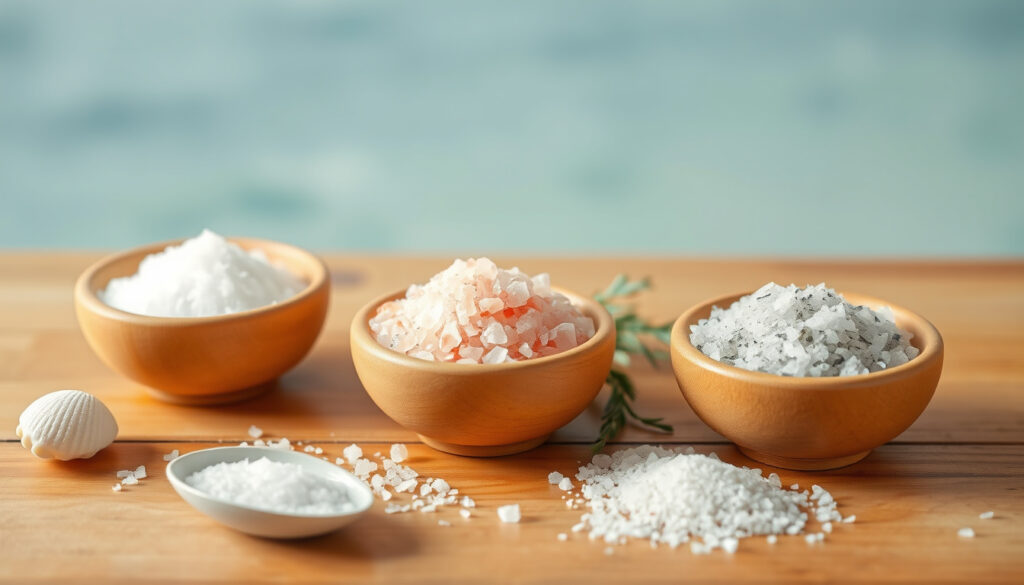
Sea Salts Guide: Health Benefits, Types, Comparisons
Few kitchen staples spark as much debate as salt. Sea salt, in particular, has become a darling of chefs and wellness enthusiasts, but the claims around its health benefits can be hard to separate from marketing hype. This guide breaks down how regional sea salts like Celtic and Irish Atlantic varieties differ in mineral composition, what that means for your health, and how they stack up against everyday table salt.
Average sodium content per teaspoon: 2,300 mg (approx.) ·
Number of trace minerals typically present: Over 70 ·
Global annual sea salt production: ~100 million metric tons ·
Common colors: White, gray, pink, black
Quick snapshot
- Global sea salt production has reached ~100 million metric tons annually, reflecting rising consumer demand for artisan, unrefined salts (Celtic Sea Salt).
- Growing interest in regional sea salts (Irish, Celtic, Hawaiian) will likely push more brands to disclose mineral profiles and harvest methods. (GoodRx)
- Health regulators may issue clearer guidance on the real benefit of trace minerals in salt (GoodRx).
| Attribute | Value |
|---|---|
| Definition | Salt produced by evaporation of seawater |
| Primary component | Sodium chloride (85–95%) |
| Key trace minerals | Magnesium, calcium, potassium, iron, zinc |
| Typical crystal size | Varies from fine to coarse |
| Production method | Solar evaporation (sun and wind) or vacuum evaporation |
| Countries of origin | Global, major producers: China, USA, India, France, Ireland |
The implication: sea salt’s composition varies widely by origin, but the primary component remains sodium chloride.
Are Sea Salts Good for You?
Potential health benefits of sea salt
- Sea salt retains trace minerals — a study from the PMC (National Institutes of Health) found it contains calcium, potassium, magnesium, iron, manganese, and zinc.
- These minerals act as natural electrolytes, supporting hydration in small amounts. However, the amounts are small: GoodRx (health editorial) notes that magnesium, potassium, and calcium make up only about 0.5% of French sea salt’s composition.
Risks and who should avoid it
- Excessive sodium from sea salt can still raise blood pressure and increase cardiovascular risk. GoodRx warns that the small mineral difference is unlikely to materially change electrolyte levels because salt is consumed in small amounts.
- People with hypertension, kidney disease, or heart failure should limit all salt intake, including sea salt.
Can you drink sea salt water every day?
Drinking concentrated salt water is generally not recommended due to the risk of sodium overload and dehydration. Health experts advise against daily consumption of saline water outside of medical supervision.
The catch: trace minerals come with a sodium load. For most people, the healthiest approach is to treat sea salt as a seasoning, not a supplement.
Sea Salt vs. Table Salt: What’s the Difference?
Composition and processing differences
- Table salt is heavily processed, often stripped of minerals and mixed with anti-caking agents and added iodine. The PMC study found refined salt can be 99.9% sodium chloride, while sea salt tested at 85.7% NaCl.
- Sea salt is minimally processed — simply evaporated seawater — retaining variable trace minerals from the source water. WebMD (medical reference) explains that Celtic sea salt, for example, gets its gray color from minerals like magnesium, calcium, potassium, zinc, and iron.
Taste and texture variations
- Sea salt’s flavor is influenced by its mineral and algae content. It often has a brinier, more complex taste than the sharp, clean saltiness of table salt. Crystal size also varies from fine to coarse, affecting how it dissolves and adheres to food.
Health implications: iodine, additives, mineral content
- Iodized table salt is a primary source of iodine in many countries, preventing deficiency. Sea salt typically lacks added iodine. WebMD notes that iodine deficiency is rare in developed countries but may be a concern for those using only non-iodized sea salt.
- The Mayo Clinic (medical institution) has stated that the mineral difference between sea salt and table salt is not clinically significant for most people.
The pattern: processing level determines mineral retention. Relying on sea salt for minerals is like expecting a sprinkle of rainwater to replace a multivitamin — the amounts are simply too small.
What Is Irish Sea Salt?
Production methods of Irish sea salt
- Irish sea salt is hand-harvested from the Atlantic Ocean off the west coast of Ireland. Brands like Achill Island Sea Salt and West of Dingle Sea Salt use traditional solar evaporation methods in the clean, cold Atlantic waters.
Unique mineral profile of Atlantic sea salt
- The cold Atlantic waters contribute a distinct mineral balance. Isle of Skye Sea Salt (artisan producer) states that Celtic-origin sea salt retains minerals such as magnesium, potassium, calcium, iron, and zinc. Irish sea salt is similar in composition to Celtic salt, often carrying higher moisture content and a briny flavor.
Comparison with other regional sea salts (Celtic, Himalayan)
- Celtic sea salt (sel gris) is harvested from the Atlantic coast of France and contains similar minerals. GoodRx reports that French sea salt naturally contains higher levels of magnesium, calcium, and potassium than regular table salt. Himalayan pink salt, while often grouped with sea salts, is technically rock salt mined from ancient sea beds in Pakistan, not evaporated seawater.
The implication: Irish sea salt is essentially a regional variant of Celtic-style salt, with a unique terroir from the North Atlantic. The differences in mineral content are real but subtle — not a nutritional game-changer.
What Is So Special About Sea Salt?
Flavor complexity and culinary uses
- Sea salt’s flavor is shaped by the minerals and algae in its source water. Chefs prize it for a delicate brininess and crunchy texture that table salt lacks. It is used not only for seasoning but in bath products, cosmetics, and food preservation.
Trace mineral content and health claims
- Brands like Celtic Sea Salt claim more than 70 trace minerals and elements are naturally present. Sea Salts of Hawaii (producer) publishes a mineral table for Kona sea salt showing 1.12% calcium, 0.21% magnesium, and 0.204% potassium — compared to ordinary table salt, which they list at 40% sodium and 60% chloride with zero additional minerals.
Environmental and production factors
- Artisan production methods — hand-harvesting from clean coastal waters — contribute to sea salt’s premium image. However, Baja Gold (producer) notes that the mineral profile of unrefined sea salts can vary naturally by batch and source, making consistency a challenge for health claims.
The catch: sea salt’s “special” status is partly genuine artisan craftsmanship and partly marketing. Scientific evidence supporting superior health benefits over table salt remains thin, as GoodRx emphasizes.
Six sea salts, one pattern: processing and origin determine mineral content, but the nutritional difference for a typical serving is negligible.
What Is the Healthiest Sea Salt to Use?
Criteria for healthiest: mineral content, purity, processing
- “Healthiest” depends on individual dietary needs. Factors include mineral density, absence of additives (no anti-caking agents), and low contamination (microplastics, heavy metals). Unrefined sea salts typically score well on purity.
Comparison of Celtic, Himalayan, Irish, and generic sea salts
No single sea salt is universally proven “healthiest.” WebMD describes Celtic salt as mostly sodium chloride with trace levels of minerals. GoodRx notes that the mineral difference is too small to significantly affect health. Himalayan pink salt contains trace minerals but is not technically sea salt — it’s a rock salt.
Practical advice for choosing a sea salt
- For most people, the best choice is an unrefined sea salt from a clean source (e.g., Irish Atlantic, Celtic). Use it in moderation — the recommended sodium limit is 2,300 mg per day (about one teaspoon). For iodine, ensure you get it from other dietary sources like dairy, seafood, or iodized salt when needed.
Why this matters: the healthiest salt is the one you use least. Focus on quality over quantity, and don’t expect sea salt to replace a balanced diet.
Here is a side-by-side comparison of sea salt and table salt across key attributes.
| Attribute | Sea salt | Table salt |
|---|---|---|
| Processing | Minimal (evaporation) | Heavily processed (high heat, chemical additives) |
| Mineral content | 85–95% NaCl; retains trace minerals | 99.9% NaCl; minerals removed |
| Iodine | Naturally low or absent | Often fortified with iodine |
| Additives | None (if unrefined) | Anti-caking agents, sometimes dextrose |
| Taste | Brinier, complex, delicate | Sharp, purely salty |
| Cost per serving | Higher (artisan brands) | Very low |
The pattern: the choice between sea salt and table salt comes down to processing, mineral retention, and iodine content — not a superior health profile for either.
Below are the typical specifications for unrefined sea salt.
| Specification | Typical value |
|---|---|
| Sodium chloride content | 85–95% (unrefined); can be 99%+ if refined |
| Moisture content | Up to 5% in unrefined (Celtic style) |
| Calcium | 0.1–1.1% (varies by source) |
| Magnesium | 0.05–0.21% |
| Potassium | 0.02–0.20% |
| Iron | Trace to 0.01% |
| Zinc | Trace |
| Manganese | Trace |
| Crystal size | Fine, medium, coarse, flaky |
| Production method | Solar evaporation or vacuum evaporation |
| Origin | Worldwide (marine environment) |
The implication: trace minerals in unrefined sea salt are present but in very small percentages, reinforcing their limited nutritional impact per serving.
Upsides
- Retains natural trace minerals from seawater
- Minimal processing — no anti-caking agents or additives
- Diverse flavors and textures for cooking
- Can be used in bath products and cosmetics
Downsides
- Lacks added iodine, which may be a concern for some
- Can contain microplastics from polluted waters
- Higher cost than table salt
- Mineral differences are too small to provide significant health benefits
What we know and what remains unclear
Confirmed facts
- Sea salt contains trace minerals not found in table salt (PMC study).
- Excess sodium from any salt can harm cardiovascular health (GoodRx).
- Iodized table salt prevents iodine deficiency more effectively than sea salt (WebMD).
What’s unclear
- Whether the trace minerals in sea salt have a significant health impact compared to table salt (GoodRx notes the difference is unlikely to be meaningful).
- Whether microplastics in sea salt pose a health risk (Baja Gold mentions variability).
- Whether Celtic sea salt truly has a lower sodium content per serving than other sea salts (WebMD describes it as mostly sodium chloride).
“The mineral difference between sea salt and table salt is unlikely to materially change electrolyte levels because salt is consumed in small amounts.”
GoodRx (health editorial)
“Celtic salt is mostly sodium chloride and has trace levels of magnesium, potassium, calcium, and iron.”
WebMD (medical reference)
For consumers looking for the most nutrient-dense salt, the choice is clear: pick an unrefined sea salt from a clean ocean source (like Irish Atlantic or Celtic). But the real health decision is about quantity, not type. Use sea salt sparingly for flavor, and if you rely on it exclusively, ensure you get iodine from other foods. The healthiest salt is the one you use the least.
traceminerals.com, sporked.com, pmc.ncbi.nlm.nih.gov, facebook.com
For a closer look at how Celtic, Himalayan, and table salts differ, see a detailed comparison of sea salt types that also explores Irish artisanal producers.
Frequently asked questions
Does sea salt expire?
Sea salt does not expire in the sense of spoiling; it remains shelf-stable indefinitely due to its low moisture content. Over time, it may clump if exposed to humidity, but it remains safe to use.
Does sea salt contain iodine?
Natural sea salt contains only trace amounts of iodine unless it is fortified. For dietary iodine, rely on iodized table salt, seafood, or dairy products.
How is sea salt harvested?
Sea salt is harvested by evaporating seawater — typically using solar energy (sun and wind) in shallow ponds, or by vacuum evaporation in some industrial settings. The salt crystals are then collected, washed, and optionally dried.
Can sea salt be used in a salt grinder?
Yes, coarse sea salt works well in a salt grinder. Ensure the salt is dry enough to avoid clogging the mechanism.
Is sea salt gluten-free?
Pure sea salt is naturally gluten-free. However, some flavored or blended salts may contain additives, so check labels if you have celiac disease or gluten sensitivity.
What is the best sea salt for baking?
Fine-grained sea salt is best for baking because it dissolves evenly. Sea salt also adds a subtle complexity to baked goods compared to table salt.
Are there different grades of sea salt?
Yes, sea salts are graded by crystal size (fine, medium, coarse, flaky) and purity. Gourmet or artisan salts often undergo less processing and retain more moisture and minerals.
Related reading
- Coral Reef: Definition, Types, Cold-Water Locations in Ireland — Explore the cold-water marine environments where Irish sea salt is harvested.
- Bee Balm Growing Guide: Care, Planting, and Uses for Monarda — For readers interested in natural products and gardening.
More related posts
 Twinkle Twinkle Little Star: Lyrics, History, and Versions
 To All the Boys I’ve Loved Before: Watch Order, Cast & Sequel
 Forgot Apple ID Password? How to Recover in 5 Steps
 62 F to C: 16.67°C Conversion, Chart & Comfort Guide
 Taylor Hall: Biography, Contract, and 2026 Stanley Cup Win
 Never Split the Difference: Key Negotiation Rules Explained
 Edmonton Trail Medical Clinic: Services, Contact & Reviews
 23 Degrees Celsius to Fahrenheit – Exact 73.4°F Conversion Guide
