Timothy McVeigh: Arrest, IQ, and Oklahoma City Bombing Facts
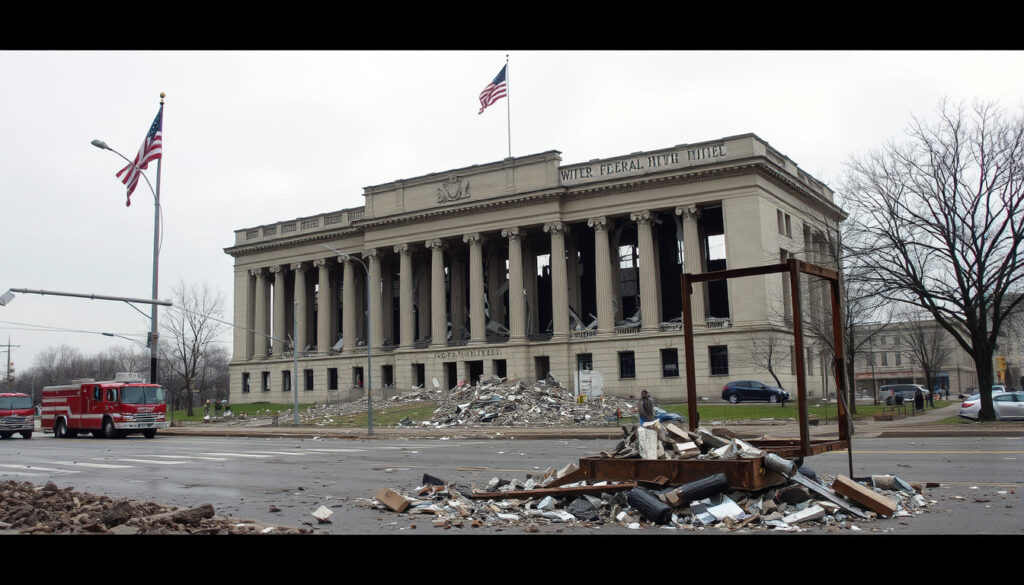
On April 19, 1995, an Oklahoma Highway Patrol trooper pulled over a car with no license plate—a routine stop that would uncover the man behind the deadliest act of domestic terrorism in American history. Within hours, 26-year-old Timothy McVeigh was behind bars, charged with the bombing of the Alfred P. Murrah Federal Building that killed 168 people and injured more than 680.
Date of bombing: April 19, 1995 ·
Deaths: 168 ·
Injuries: Over 680 ·
Perpetrator: Timothy McVeigh ·
Execution date: June 11, 2001
Quick snapshot
- McVeigh was arrested 75 minutes after the bombing during a traffic stop near Perry, Oklahoma (Famous Trials legal analysis).
- 168 people died and 684 were injured (NPR news reporting).
- McVeigh was executed by lethal injection on June 11, 2001 (Wikipedia general reference).
- McVeigh’s exact IQ varies by source (119, 125, or 126) and has not been officially confirmed (Los Angeles Times news reporting).
- Whether he had any communication with Ted Kaczynski inside prison remains unknown (Wikipedia general reference).
- The full extent of his ties to other anti-government groups is still debated (Famous Trials legal analysis).
- April 19, 1995: Bombing at 9:02 AM; McVeigh arrested later that day (Famous Trials legal analysis).
- April 21, 1995: A former co-worker identified McVeigh from police sketches, leading to an arrest warrant (Famous Trials legal analysis).
- The Oklahoma City National Memorial continues to educate about the attack (Oklahoma City National Memorial & Museum official memorial).
- Legislative changes after the bombing led to new federal building security standards (Wikipedia general reference).
Eight key facts about Timothy McVeigh and the Oklahoma City bombing—one pattern: the timeline from attack to capture was shockingly short.
| Attribute | Detail |
|---|---|
| Full name | Timothy James McVeigh |
| Born | April 23, 1968, Lockport, New York |
| Died | June 11, 2001, Terre Haute, Indiana |
| Education | High school graduate; some college |
| Military service | U.S. Army, 1990–1991 (Gulf War) |
| Bombing date | April 19, 1995 |
| Arrest date | April 19, 1995 |
| Trial | Denver, Colorado, 1997 |
The table shows how quickly McVeigh moved from soldier to suspect to convict.
Why was Timothy McVeigh stopped?
McVeigh was pulled over by Oklahoma Highway Patrol Trooper Charlie Hanger for a missing license plate. The stop occurred about 75 minutes after the bombing near Perry, Oklahoma, and Hanger was unaware of the attack at the time (Famous Trials legal analysis). During the stop, Hanger noticed a bulge under McVeigh’s jacket—a concealed firearm—and arrested him for carrying a loaded Glock and a knife without a permit (Famous Trials legal analysis).
Who stopped Timothy McVeigh?
Trooper Charlie Hanger of the Oklahoma Highway Patrol made the arrest. McVeigh was still in the Noble County jail two days later when he was identified as a suspect (Oklahoma Highway Patrol Facebook post).
A missing license plate gave law enforcement the only window they had: had the plate been attached, McVeigh would have driven past Hanger and vanished.
The implication: a minor traffic violation became the linchpin of the entire investigation.
Did Timothy McVeigh know the Unabomber?
Both McVeigh and Ted Kaczynski—the Unabomber—were held at the supermax prison in Florence, Colorado, but there is no evidence they were cellmates or communicated. The question likely arises from their proximity in the same facility rather than any actual contact (Wikipedia general reference).
Did Ted Kaczynski ever forgive his brother?
David Kaczynski reported his brother Ted to the FBI. Ted never forgave David, but this family rift is unrelated to McVeigh. No link connects the two bombers beyond shared incarceration (Wikipedia general reference).
The McVeigh–Kaczynski connection is a frequent internet myth. No credible source places them in contact.
The pattern: proximity in prison does not equal collaboration.
Did any children survive the OKC bombing?
Nineteen children under the age of 6 were killed in the bombing (Wikipedia general reference). However, several children survived, including the famous “miracle babies” rescued from the America’s Kids daycare center. One infant, Brandon Denny, was pulled from the rubble alive (Oklahoma City National Memorial & Museum official memorial).
Were all the bodies recovered from the Oklahoma City bombing?
All 168 bodies were recovered, though some victims were severely dismembered (Wikipedia general reference).
What this means: the recovery effort was exhaustive but grim.
What was Timothy McVeigh’s IQ?
Reports place McVeigh’s IQ at 119, 125, or 126. The most commonly cited figure is 126, assessed during psychological evaluations (Wikipedia general reference). The Denver Post trial notes report a score of 119 and noted he performed well on his SATs (The Denver Post trial report). TIME magazine reported that teachers considered him intelligent, citing a “well-above-average 125” (TIME news reporting).
What was Timothy McVeigh’s education?
McVeigh graduated high school and briefly attended Genesee Community College. He was an avid reader of right-wing literature and survivalist manuals (Los Angeles Times news reporting).
The catch: high intelligence did not prevent radicalization.
Are Timothy McVeigh’s parents still alive?
McVeigh’s parents, Bill and Mildred “Mickey” McVeigh, divorced in 1986. Bill McVeigh died in 2012; Mildred McVeigh is still alive as of 2024 (Los Angeles Times news reporting). His father worked in a factory; his mother was a travel agent.
What happened to Timothy McVeigh’s family after the bombing?
The McVeigh family faced intense public scrutiny and harassment. During the trial, Bill McVeigh told jurors, “I love Tim,” and Mickey McVeigh said, “Tim was a child any mother could be proud of; I still to this day cannot believe he would have caused this devastation” (Famous Trials legal analysis).
The implication: the family bore a heavy burden of public shame.
Timeline
- April 23, 1968: Timothy McVeigh born in Lockport, New York (Wikipedia general reference).
- 1990–1991: Serves in the U.S. Army, including the Gulf War (Wikipedia general reference).
- 1993: Radicalization intensifies after the Waco siege; begins planning attack (Wikipedia general reference).
- April 19, 1995: Oklahoma City bombing occurs; McVeigh arrested that afternoon (Famous Trials legal analysis).
- April 21, 1995: McVeigh charged with federal crimes (Famous Trials legal analysis).
- 1995–1997: Pre-trial proceedings; venue changed to Denver (Wikipedia general reference).
- June 2–13, 1997: Trial; jury finds McVeigh guilty on all 11 counts (Wikipedia general reference).
- August 14, 1997: Sentenced to death by lethal injection (Wikipedia general reference).
- June 11, 2001: Executed at USP Terre Haute, Indiana (Wikipedia general reference).
Confirmed facts
- McVeigh was the mastermind and perpetrator of the Oklahoma City bombing (Wikipedia general reference).
- He was stopped by Trooper Charlie Hanger for a missing license plate (Famous Trials legal analysis).
- 168 people died in the bombing (NPR news reporting).
- He was executed by lethal injection on June 11, 2001 (Wikipedia general reference).
What’s unclear
- Exact IQ score (reports vary between 119 and 126) (Los Angeles Times news reporting).
- Full extent of his ties to other anti-government groups (Famous Trials legal analysis).
- Whether he had any contact with Ted Kaczynski in prison (Wikipedia general reference).
- Precise nature of his relationship with Terry Nichols in the planning phase (Wikipedia general reference).
“Tim was a child any mother could be proud of; I still to this day cannot believe he would have caused this devastation.”
— Mildred McVeigh, mother of Timothy McVeigh, testifying at trial (Famous Trials legal analysis)
“I love Tim.”
— Bill McVeigh, father of Timothy McVeigh, speaking in court (Famous Trials legal analysis)
The Oklahoma City bombing tore a hole in the center of a city and reshaped how America understood domestic terrorism. For law enforcement and the nation, the lesson is clear: a routine traffic stop can have extraordinary consequences, and vigilance remains essential.
För den som vill fördjupa sig i McVeighs roll i attentatet finns en detaljerad redogörelse hos McVeighs roll i attentatet.
Frequently asked questions
What was Timothy McVeigh’s role in the Gulf War?
McVeigh served as a gunner on a Bradley Fighting Vehicle during the Gulf War. He was awarded several medals but later expressed disillusionment with the military (Wikipedia general reference).
How did McVeigh die?
He was executed by lethal injection on June 11, 2001, at USP Terre Haute (Wikipedia general reference).
Why did McVeigh choose the Alfred P. Murrah building?
He targeted the building because it housed multiple federal law enforcement agencies, particularly the FBI and ATF, which he blamed for the Waco and Ruby Ridge sieges (Wikipedia general reference).
Was anyone else convicted for the Oklahoma City bombing?
Terry Nichols was convicted on federal and state charges and is serving life in prison. Michael Fortier, who knew of the plot, was sentenced to 12 years (Wikipedia general reference).
What changes in security occurred after the bombing?
Federal buildings nationwide installed barriers, bollards, and vehicle inspection points. The Antiterrorism and Effective Death Penalty Act of 1996 also expanded federal law enforcement powers (Wikipedia general reference).
Where is Timothy McVeigh buried?
His remains were cremated and his ashes reportedly scattered at an undisclosed location (Wikipedia general reference).
How did McVeigh fund the bombing plot?
He used money from a robbery of a gun dealer and proceeds from selling firearms (Wikipedia general reference).
What happened to McVeigh’s accomplice Terry Nichols?
Nichols is serving 161 life sentences without parole at ADX Florence in Colorado (Wikipedia general reference).
More related posts
 Puka Nacua: Ethnicity, Girlfriend, Salary & Why He Cries Before Games
 Chris Stapleton: Illness, Wife, Tour, Facts Answered
 Ali Larter: Biography, Career, and Family Life
 What Is Plantar Fasciitis – Symptoms, Causes, Treatments
 Mélanie Joly: Biography, Career, Net Worth, Contact
 250 ml to oz: Exact Conversion & Common Equivalents
 Things to Do in Nanaimo: Top Attractions, Day Trips & More
 Yoo In-soo: All of Us Are Dead Actor, Military Service & Dramas
